Time and its measurement
All My Puny SorrowsTime and its measurement give ordinary life names and divisions, but the novel refuses to treat those divisions as equivalent to lived experience. In conversations between Elfrieda Von Riesen and Yolandi Von Riesen, measured time is at once a practical necessity, a hopeful human invention, and an arrangement Elfrieda resists. Calendars and minutes can mark passage; they cannot explain what that passage feels like, or promise that it will become bearable.
Naming and resisting time
Elfrieda’s reflections begin with the contrast between time’s tidy units and the elusive reality they are meant to describe. Seconds, minutes, days, months, and years can all be accounted for and named, while life itself remains unwieldy and difficult to grasp. She regards the invention of timekeeping with compassion: its very effort to make life measurable seems to her hopeful, futile, and human. The point is not simply that clocks are inaccurate. Rather, their orderly divisions cannot encompass the experience they organize.
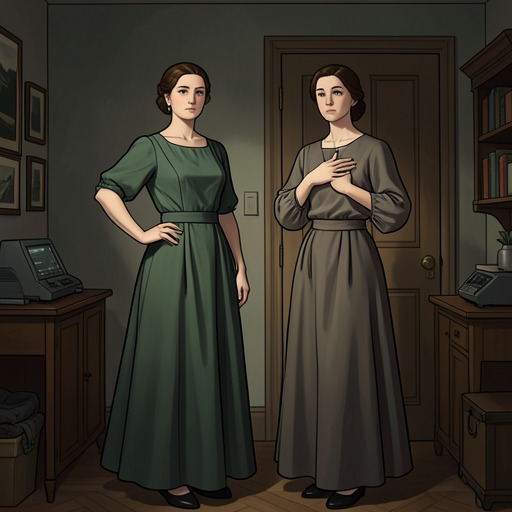
Yolandi answers that the failure of a system to capture life does not make measurement unnecessary. Her response gives practical value to the structure Elfrieda rejects: even if time cannot be contained by its units, people still need some way to measure their lives. Elfrieda counters that dividing time into compartments imposes a restrictive, bourgeois order on something that, in her view, lies outside categorization and definition. The sisters therefore do not reach agreement. Their exchange preserves two distinct positions: Yolandi speaks for the usefulness of shared measures, while Elfrieda insists on the distance between those measures and experience.
Their argument also turns the conversation itself into an example. Yolandi says she must leave because the two hours she purchased on the parking meter are probably over. The small, concrete limit interrupts a philosophical discussion about whether time can be meaningfully divided. Elfrieda recognizes that Yolandi has found a way to make her go, and the sisters embrace before Yolandi leaves. The meter measures a practical allowance; it cannot measure the difficulty of leaving, the affection in the embrace, or the minute they spend breathing together. The scene sets public, counted time beside a private interval whose significance does not depend on a clock.
Calendars and the limits of certainty
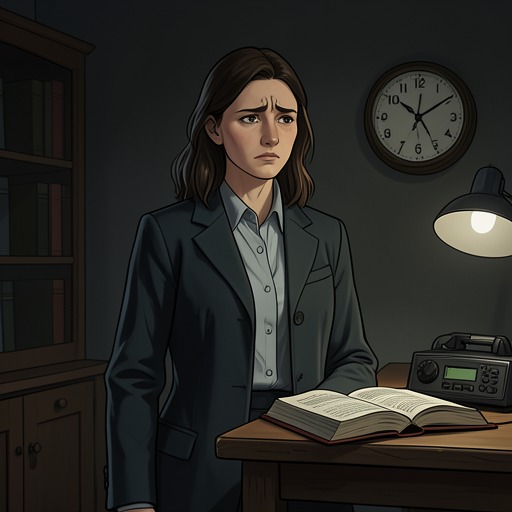
Timekeeping recurs in the hospital through a calendar that has not kept pace with the month. While sitting with Janice, Yolandi notices that it still displays March when it should show April. The stale page makes institutional time visible as something maintained by small, fallible actions rather than as a reliable abstraction. Janice eventually changes it. The correction restores the right month on the wall, but it does not resolve the questions that brought Yolandi there.
Those questions concern Elfrieda’s medication and whether it might change her sense of meaning or her capacity to go on living. Janice cannot say what effect the pills would have, and explains that the uncertainty is complicated by Elfrieda’s refusal to take them. Yolandi describes the pattern as an alternation between taking many pills at once and taking none. In this conversation, the corrected calendar offers no comparable certainty about what comes next. A month can be named and its page turned; the effect of treatment, and Elfrieda’s response to it, remain unknown.
Yolandi’s attention to the calendar also belongs to her own difficulty speaking. She sits shaking her head, with a finger pressed to her lips, as if holding words in, and watches the month that has failed to change. Janice keeps a hand on her shoulder rather than forcing an answer. The mismatch between March and April gives the scene a precise marker of delay, while Yolandi’s silence conveys an experience that cannot be made orderly simply by correcting the date. The novel thus distinguishes between repairing a visible error in timekeeping and addressing the uncertainty attached to illness and care.
Repetition and lived duration
Nic describes another dimension of time when he tells Yolandi how Elfrieda experiences the days. Each one returns with familiar signs of possibility: the sun rises, birds begin to sing, and hope appears for a moment. Then the day ends, darkness comes, and the promise seems to have been another tease. The sequence makes time feel less like forward movement than recurrence without delivery. Yolandi asks whether the repetition itself is what torments Elfrieda, but Nic can only sigh; he does not know.
That uncertainty matters. The account identifies a pattern in Elfrieda’s experience without claiming to explain it fully or reduce it to a single cause. Days continue to arrive, but their regularity does not guarantee progress or relief. Against the calendar’s clean succession of dates, Nic’s description presents duration as an exhausting cycle of expectation and disappointment. The sun’s return can mark another day while also renewing the possibility that will later seem to have failed.
Across these scenes, measured time is neither dismissed as useless nor presented as an answer. It enables Yolandi to set a limit on a visit, gives the hospital calendar a correct month, and supplies the ordinary language in which lives are counted. Yet the parking meter cannot account for the sisters’ parting, a turned page cannot settle questions about medication, and the return of morning does not end Elfrieda’s torment. The concept gains its force from that contrast: human systems can mark time, but they cannot make lived time predictable, divisible, or easy to endure.